Oct 8, 2026Blog
Glass Candle Jar Packaging: Auto-Lock Bottom Box Design Guide | Luxton Package
Learn how to design protective packaging for glass candle jars using auto-lock bottom corrugated cartons, custom inserts, structural testing and multi-SKU printing.
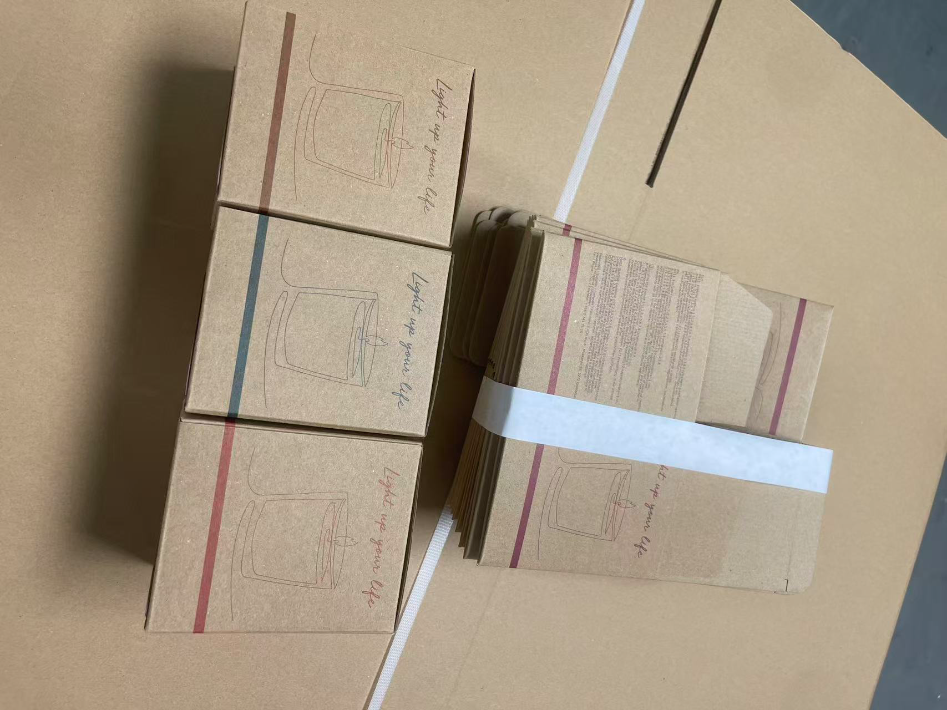
How to Design Protective Packaging for Glass Candle Jars
Glass candle jars create a difficult packaging balance. The box needs to protect a relatively heavy and fragile vessel, keep it from moving during handling, remain efficient to assemble, and still provide enough printable surface to communicate the fragrance brand.
One practical solution is an auto-lock bottom corrugated carton with custom internal supports.
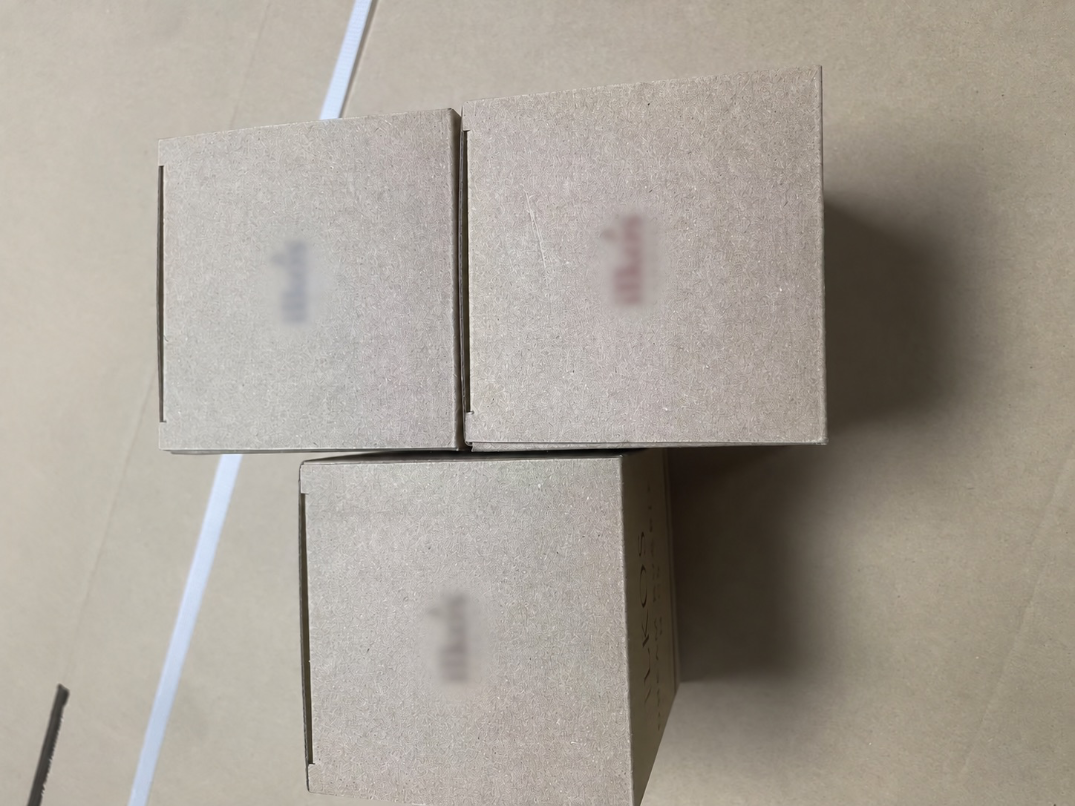
In a recent European candle packaging project, one structural design was used across four fragrance variants. Each version used its own color direction while sharing the same carton dimensions and protective system.
The project demonstrates an important packaging principle: for glass candles, the outer carton, insert and product weight should be engineered together rather than treated as separate components.
Quick Answer: Is an Auto-Lock Bottom Box Suitable for Glass Candles?
Yes, it can be.
An auto-lock bottom carton can be suitable for a glass jar candle when the carton material, base strength, internal support and finished candle weight are evaluated together.
The automatic bottom provides a pre-glued locking base that assembles quickly, while properly designed upper and lower inserts can reduce movement between the glass jar and carton walls.
However, the structure should always be sampled with the finished candle, including the jar, wax and lid, before mass production.
Real Candle Packaging Project Snapshot
This European candle packaging project used one structure across four fragrance collections.
Project Detail | Specification |
|---|---|
Product | Lidded glass jar candle |
Packaging Structure | Auto-lock bottom corrugated carton |
Material | Three-layer kraft corrugated board |
Finished Box Size | 115 × 85 × 85 mm |
Internal Protection | Upper and lower corrugated supports |
Variants | 4 fragrance designs |
Quantity | 5,000 cartons per variant |
Total Production | 20,000 cartons |
Printing | Four-color printing |
Finishing | Embossing + UV treatment |
Project Sample Time | 4 days |
Project Bulk Production Time | 13 days |
These lead times were achieved for this specific project and should not be treated as standard lead times for every order. Future schedules depend on box structure, materials, artwork, quantity, finishing and approval requirements.
The Main Packaging Challenge: Glass Is Heavy and Fragile
A candle jar may appear simple to package because it is usually cylindrical and compact. In practice, its combination of glass, filled weight and a separate lid creates several structural challenges.
If the carton is oversized, the jar can move during transportation and repeatedly contact the carton walls.
If the carton is too tight, variations in glass dimensions or packaging tolerances can make packing difficult.
If the bottom panel is insufficiently supported, the filled candle places concentrated weight on the base.
And if the lid is not considered when calculating the finished product height, the internal support may fit the glass vessel but not the complete retail product.
For this reason, a useful packaging brief should start with the finished candle rather than only the empty container.
Why the Finished Candle Weight Matters
Packaging engineers should consider at least:
- Jar diameter or length and width
- Total height with lid
- Filled candle weight
- Lid material and dimensions
- Glass shape
- Distribution method
- Expected stacking
- Number of fragrance or artwork variants
A 300 g empty glass vessel and the same vessel filled with wax do not place the same demands on the packaging.
The box therefore needs to be evaluated in its loaded condition, particularly when selecting corrugated construction, bottom structure and internal supports.
Why Use an Auto-Lock Bottom Structure?
An auto-lock bottom, also called an automatic bottom or crash-lock bottom, is a folding carton structure with a pre-glued bottom that automatically moves into its locked position during assembly.
For suitable candle projects, it provides several practical advantages.
Faster Packing
Compared with structures requiring several bottom flaps to be manually locked, an automatic bottom can reduce assembly steps.
This becomes particularly useful when thousands of candle boxes need to be packed during mass production.
More Controlled Base Construction
The bottom panels overlap and lock together, creating a more substantial base than a simple straight-tuck structure.
The actual performance still depends on the board material, dimensions, candle weight and overall structural design.
Flat-Packed Before Use
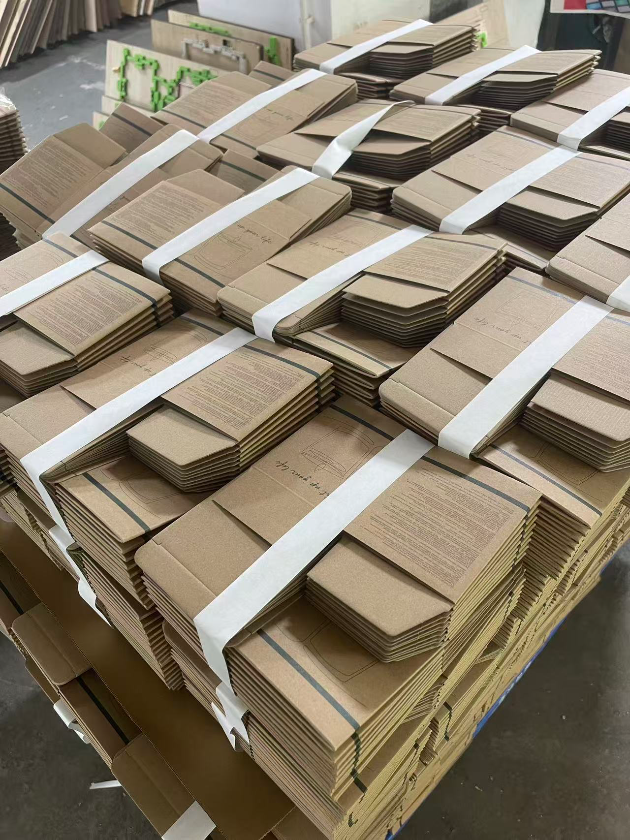
Unlike many rigid boxes, folding corrugated cartons can normally be transported and stored flat before assembly.
For larger production volumes, this can reduce packaging storage requirements and improve logistics efficiency.
For brands comparing alternative structures, Custom Rigid Candle Packaging Boxes may be more suitable when presentation value is more important than flat-pack efficiency.
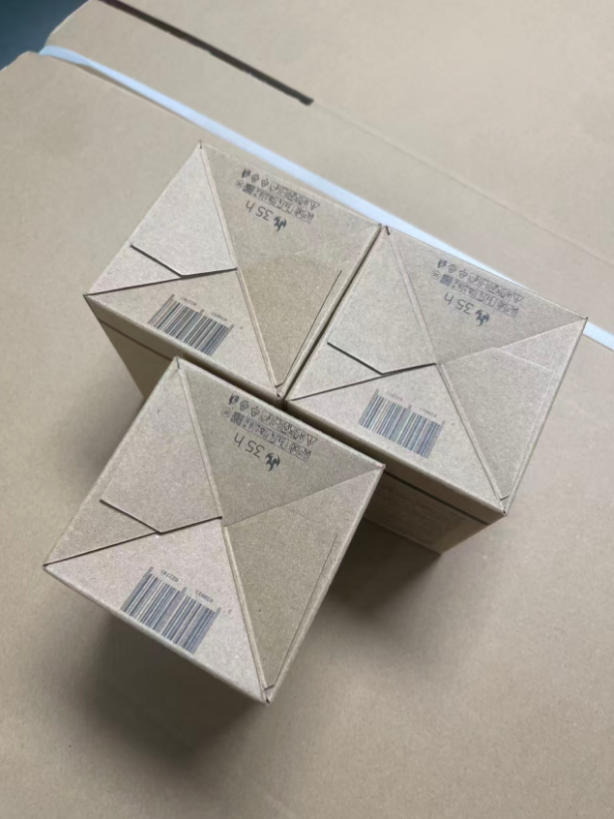
Why Three-Layer Kraft Corrugated Board Was Used
For this project, the carton was developed using three-layer kraft corrugated board.
Corrugated board consists of liner material combined with a fluted layer. This structure provides more stiffness and cushioning than a simple single-layer paperboard in a comparable packaging format.
For glass candle packaging, corrugated construction can help resist:
- Side compression
- Handling pressure
- Stacking loads
- Product movement
- Localized impact
However, heavier material is not automatically better.
Increasing board thickness can improve rigidity, but it also increases material consumption, packaging weight and potentially transportation cost.
The right construction should therefore be selected according to the actual candle rather than simply choosing the thickest available board.
The Insert Is as Important as the Outer Carton
One of the most important lessons from this project is that protecting a glass candle does not depend on the outer carton alone.
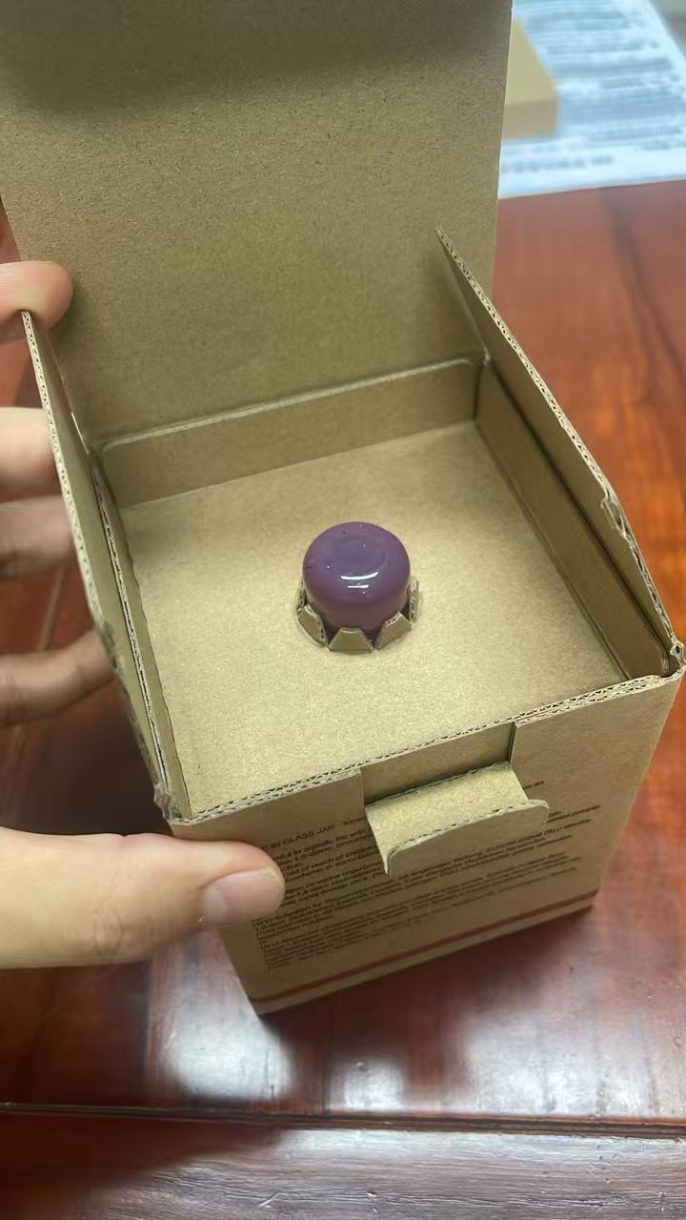
The packaging incorporated upper and lower corrugated supports around the candle vessel. Their purpose was to establish defined positioning and reduce free movement inside the carton.
This is different from simply placing a candle inside a box that is approximately the correct size.
Lower Support
The lower insert helps locate the base of the candle and control lateral movement.
For a heavy filled jar, this area also needs to work with the carton base to manage product weight.
Upper Support
An upper support can help prevent the candle and lid from shifting toward the top or sides of the carton.
This becomes particularly useful when the candle does not fill the complete internal height of the box.
Clearance Still Matters
The insert should hold the product securely without requiring excessive force during packing or removal.
Too much clearance allows movement.
Too little clearance creates packing problems and may place unwanted pressure on the glass jar.
Physical sampling is therefore important before approving mass production.
Do All Glass Candle Boxes Need Inserts?
No.
An insert is not automatically required for every candle package.
The decision depends on:
- Product-to-box clearance
- Candle weight
- Glass shape
- Carton construction
- Shipping method
- Retail presentation requirements
If the candle already fits closely inside a sufficiently strong carton, additional packaging components may not provide meaningful benefits.
For heavier, more fragile or irregular vessels, a paperboard, corrugated, EVA or foam insert may provide additional positioning or cushioning.
The most efficient packaging is not necessarily the structure containing the most material. It is the structure that provides the required performance with appropriate material use.
One Dieline Can Support Multiple Fragrance Variants
Candle brands frequently sell several fragrances using the same glass vessel.
From a packaging procurement perspective, this creates an opportunity to standardize the box structure.
In this project, the same carton format was used across four fragrance variants. The structure and dimensions remained consistent while the printed color direction changed for each fragrance.
This approach can simplify:
- Packing procedures
- Structural approval
- Insert production
- Inventory planning
- SKU development
- Future fragrance launches
Rather than engineering four completely different boxes, a brand can develop one validated packaging platform and change the artwork according to SKU.
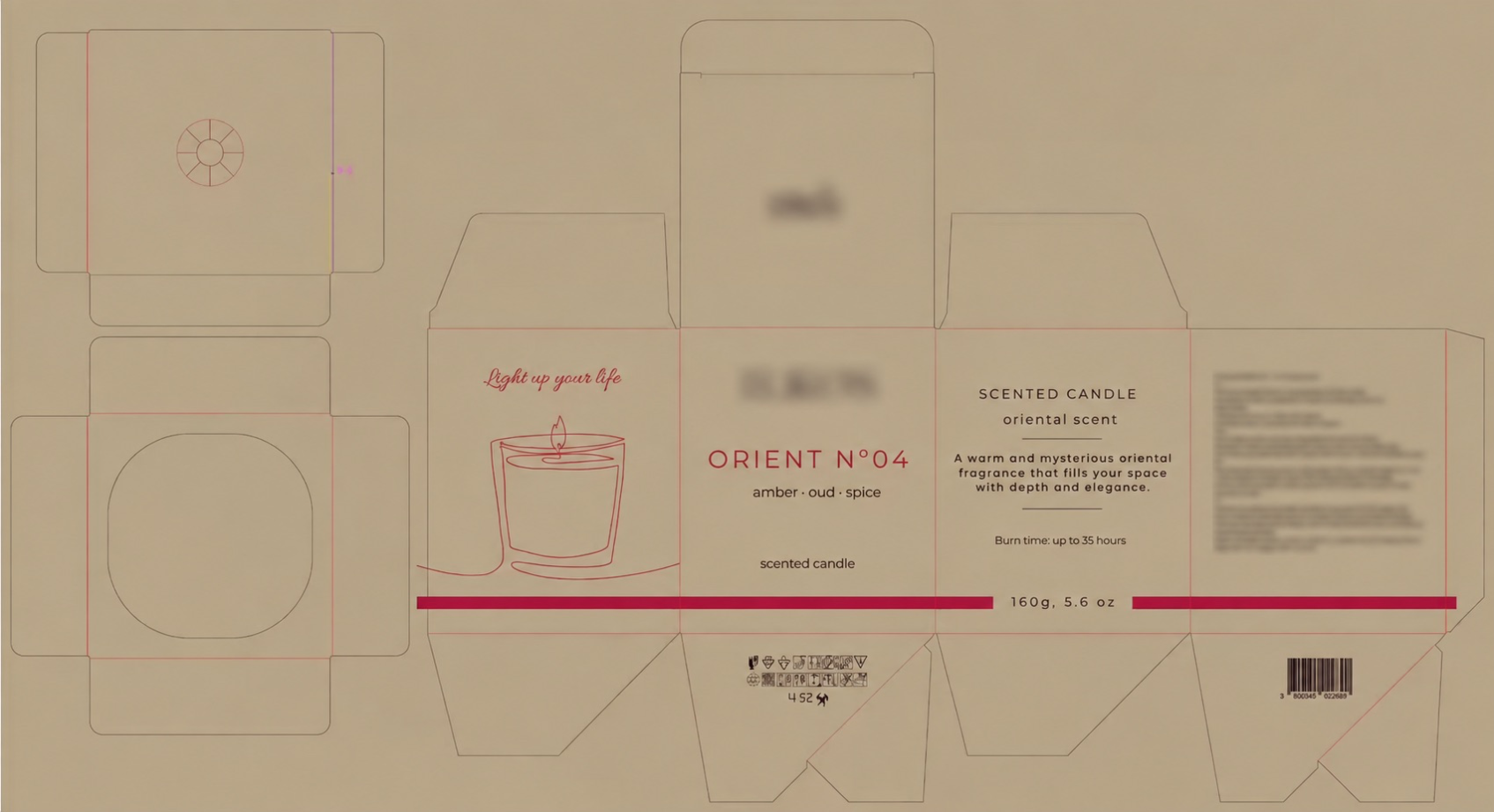
How to Differentiate Multiple Candle Scents
Color is one of the simplest ways to distinguish fragrance variants while maintaining a unified packaging family.
A candle brand can keep the following elements consistent:
- Box dimensions
- Logo position
- Typography
- Insert
- Dieline
- Information hierarchy
Then change:
- Main color
- Fragrance name
- Botanical graphics
- Product imagery
- Barcode
- SKU information
This creates clear differentiation between products while maintaining recognizable brand consistency.
It can also simplify the development of future fragrances because the packaging structure does not need to be redesigned each time a new scent is introduced.
Printing and Finishing Should Support the Structure
Protective candle packaging does not need to look purely functional.
For this project, four-color printing was combined with embossing and UV treatment to create additional visual and tactile details across the fragrance collection.
When specifying decorative finishes for corrugated candle cartons, brands should consider how each process performs on the selected paper surface.
For example, printed graphics can provide strong SKU differentiation, while selective UV can create contrast between matte and glossy areas.
Embossing can add physical depth to logos or graphic elements, but the artwork, paper surface and structural position need to be considered together.
Finishing should therefore be planned before sampling rather than added after the carton structure has already been approved.
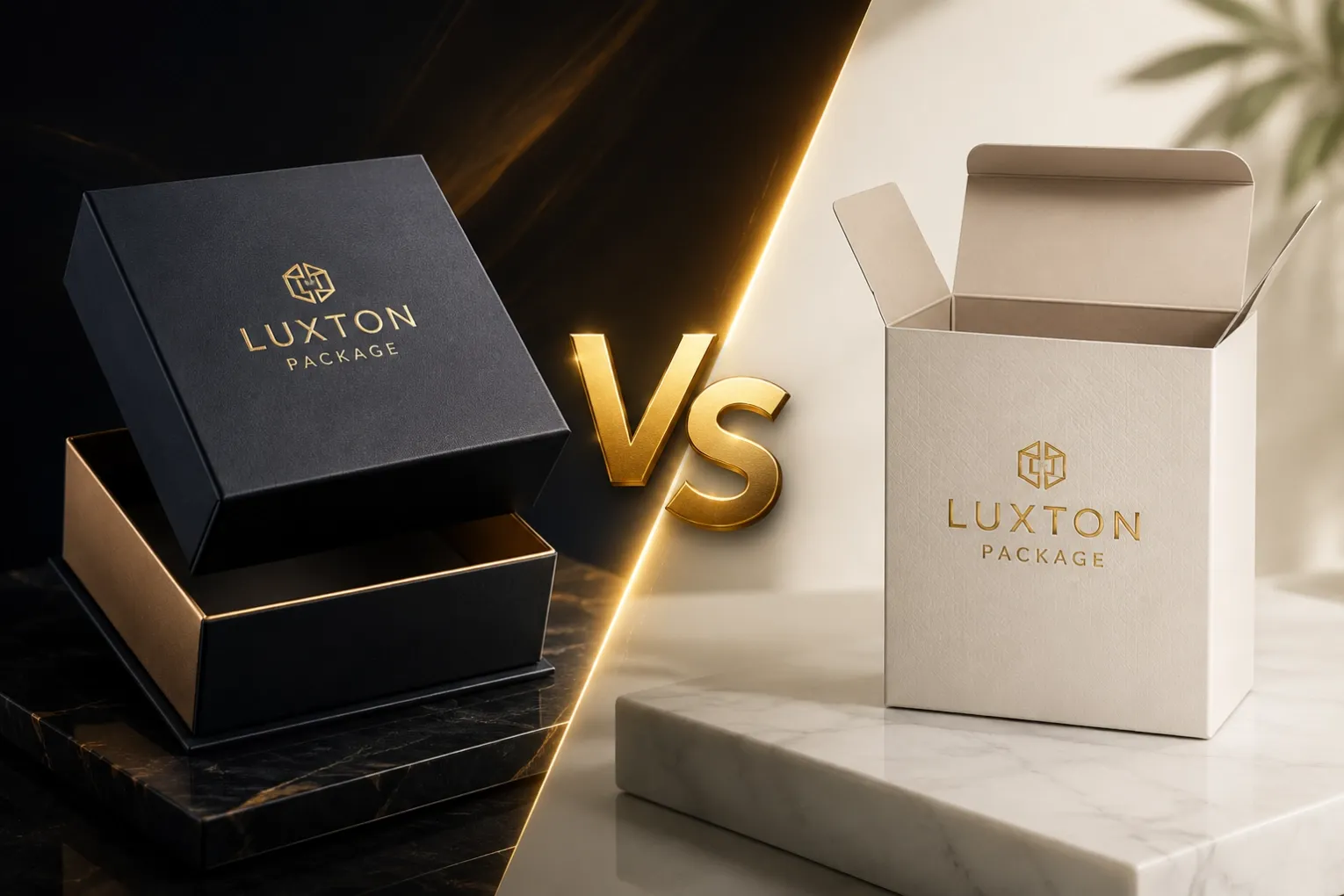
Auto-Lock Carton vs. Rigid Candle Box
There is no single candle packaging structure suitable for every brand.
An auto-lock corrugated carton and a rigid candle box solve different packaging priorities.
Factor | Auto-Lock Corrugated Carton | Rigid Candle Box |
|---|---|---|
Delivery Format | Usually flat-packed | Usually assembled |
Packing Efficiency | Fast assembly | Requires more handling space |
Structural Feel | Functional and protective | More substantial |
Material Usage | Relatively efficient | Higher material usage |
Product Positioning | Retail / premium retail | Premium / luxury gifting |
Branding | High print flexibility | Strong material and finishing options |
Storage | Space-efficient | Requires more storage volume |
For everyday candle collections or larger-volume retail programs, an auto-lock corrugated carton may provide a practical balance between protection, branding and logistics.
For premium gifting, limited editions or products where the unboxing experience carries more brand value, a Custom Candle Packaging Box using rigid greyboard construction may be more appropriate.
For brands seeking a classic premium presentation, a Custom Lid and Base Rigid Box can reveal the complete candle immediately after opening.
For larger candle gift sets, a Custom Magnetic Gift Box can provide a hinged opening and stronger presentation experience.
The box structure should follow the commercial objective rather than being selected solely by appearance.
What Candle Brands Should Test Before Mass Production
A good packaging sample should do more than confirm that the artwork looks correct.
For a glass candle carton, buyers should evaluate the following points.
1. Product Fit
Place the finished filled candle and lid inside the box.
Check that the product can be packed and removed without difficulty.
2. Internal Movement
Gently handle and rotate the packed carton.
Excessive movement may indicate that the internal support or structural clearance needs adjustment.
3. Bottom Performance
Evaluate the automatic bottom while the actual product weight is inside the box.
The base should remain correctly assembled during normal packing and handling conditions.
4. Insert Position
Check whether the upper and lower supports remain correctly positioned after repeated packing and unpacking.
5. Artwork Across All SKUs
When several fragrance variants share one dieline, each artwork version should still be checked independently.
Barcodes, fragrance names, legal information, colors and finishing positions can differ even when the physical structure remains identical.
6. Shipping Packaging
The retail box is only one part of transportation protection.
The master carton, number of products per carton, internal dividers and shipping method should also be considered when fragile glass products are transported internationally.
Retail Packaging Is Not the Same as Shipping Protection
A common packaging mistake is expecting the printed retail candle box to provide all protection required for international shipping.
The retail carton primarily protects and presents the individual product.
During transportation, multiple units are normally packed inside a stronger master shipping carton. Depending on the product and shipping method, additional dividers, protective material or reinforced outer cartons may be required.
This distinction is particularly important for glass candles because damage can result from impacts between individual units as well as compression from external handling.
When evaluating a candle packaging system, buyers should therefore consider three levels:
- The glass candle and lid
- The individual retail packaging
- The master shipping carton
All three contribute to the final transportation performance.
Cost vs. Protection: Avoid Overengineering
More material does not always mean better packaging.
Using very thick board, multiple inserts and oversized cartons may increase apparent protection, but it can also increase:
- Material cost
- Packaging weight
- Shipping volume
- Assembly time
- Storage requirements
The better approach is to identify the actual risks and develop the structure around them.
For example, if movement is the primary concern, improving the insert may be more effective than significantly increasing outer-board thickness.
If the bottom is the weakest point, strengthening the base structure may provide more value than adding unnecessary material to the sidewalls.
Packaging engineering should therefore focus on where structural support is required, not simply on making every component heavier.
What This Candle Packaging Project Teaches Buyers
This European candle packaging project provides several useful lessons for purchasing managers and candle brands.
First, packaging should be designed around the finished candle, not just the empty glass jar.
Second, internal positioning can be as important as outer-board strength.
Third, one validated structural design can often support several fragrance SKUs, reducing the need to develop separate box constructions for every product variation.
Fourth, packaging efficiency should include both production and packing. An auto-lock bottom structure can simplify assembly when larger quantities are required.
Finally, physical sampling should confirm the relationship between the carton, insert, filled product weight, printing and packing process before bulk production.
For fragile products, these decisions are interconnected. Changing the jar, lid, insert, board or finished weight can affect how the complete package performs.
Information to Prepare Before Requesting a Candle Packaging Quote
To receive a useful packaging recommendation and quotation, prepare the following information:
- Finished candle diameter or length × width
- Total height including lid
- Filled product weight
- Photos of the candle and lid
- Required quantity
- Number of fragrance variants
- Logo and artwork if available
- Preferred box style
- Reference packaging images
- Destination country
- Expected shipping method
If your packaging artwork is not finished, Luxton Package can also help evaluate the box structure, material, insert and visual direction before sampling.
Frequently Asked Questions
Can an auto-lock bottom carton hold a glass candle jar?
Yes. An auto-lock bottom carton can be suitable for glass candles when the carton structure, board strength, finished candle weight and internal support are developed together. The final packaging should be tested with the actual filled candle before bulk production.
Is corrugated board suitable for premium candle packaging?
Yes. Corrugated packaging does not need to look purely industrial. Custom printing, embossing, selective UV and well-developed artwork can create a branded retail presentation while maintaining the structural advantages of corrugated material.
Should candle packaging be designed around the jar dimensions or filled weight?
Both matter. Dimensions determine product fit and structural clearance, while filled weight influences board selection, bottom strength, inserts and transportation requirements.
Can several candle fragrances use the same box structure?
Yes. When several fragrances use the same candle vessel, one structural dieline can often support multiple artwork versions. Each SKU should still be checked for color, fragrance name, barcode, regulatory information and finishing accuracy.
Is a paper or corrugated insert better than foam?
It depends on the candle vessel and protection requirements. Paper-based inserts can provide effective positioning while keeping the packaging predominantly paper-based. EVA or foam may provide additional cushioning for particularly heavy, fragile or irregular products.
Can candle boxes ship flat?
Auto-lock bottom cartons and many folding carton structures can be supplied flat, which helps reduce storage and shipping volume before packing. Rigid candle boxes are generally more space-consuming unless a foldable rigid structure is specifically developed.
How long does candle packaging sampling and production take?
Lead time depends on the box structure, artwork, material, finishing, quantity and approval process. In the project discussed in this article, the sample was completed in 4 days and bulk production in 13 days. These timings were specific to that project and should not be treated as guaranteed standard lead times.
Custom Candle Packaging Made for Your Brand
A reliable candle box starts with the actual product.
Send Luxton Package your finished candle dimensions, height with lid, filled product weight, number of fragrance variants, order quantity, artwork or logo, reference images and destination country.
Our packaging engineers and visual designers can help evaluate the appropriate carton structure, paper material, internal support, printing and surface finishing before sampling and mass production.
For brands requiring a more presentation-focused solution, we can also develop Custom Candle Packaging Boxes, Custom Lid and Base Rigid Boxes, magnetic gift boxes and other structures with customized inserts.