
Chocolate Box
Custom Fast Food Packaging Set | Takeaway Food Boxes | Luxton Package
A typical set may include burger boxes, fry sleeves, folding food cartons, chicken or meal boxes and takeaway paper bags. Each item can be customized in size, paper structure and printing according to the food, serving portion and distribution method. Because hot and greasy foods create different packaging demands, material and food-contact requirements should be confirmed for each component rather than applying one specification to the complete set.
Custom Fast Food Packaging Set
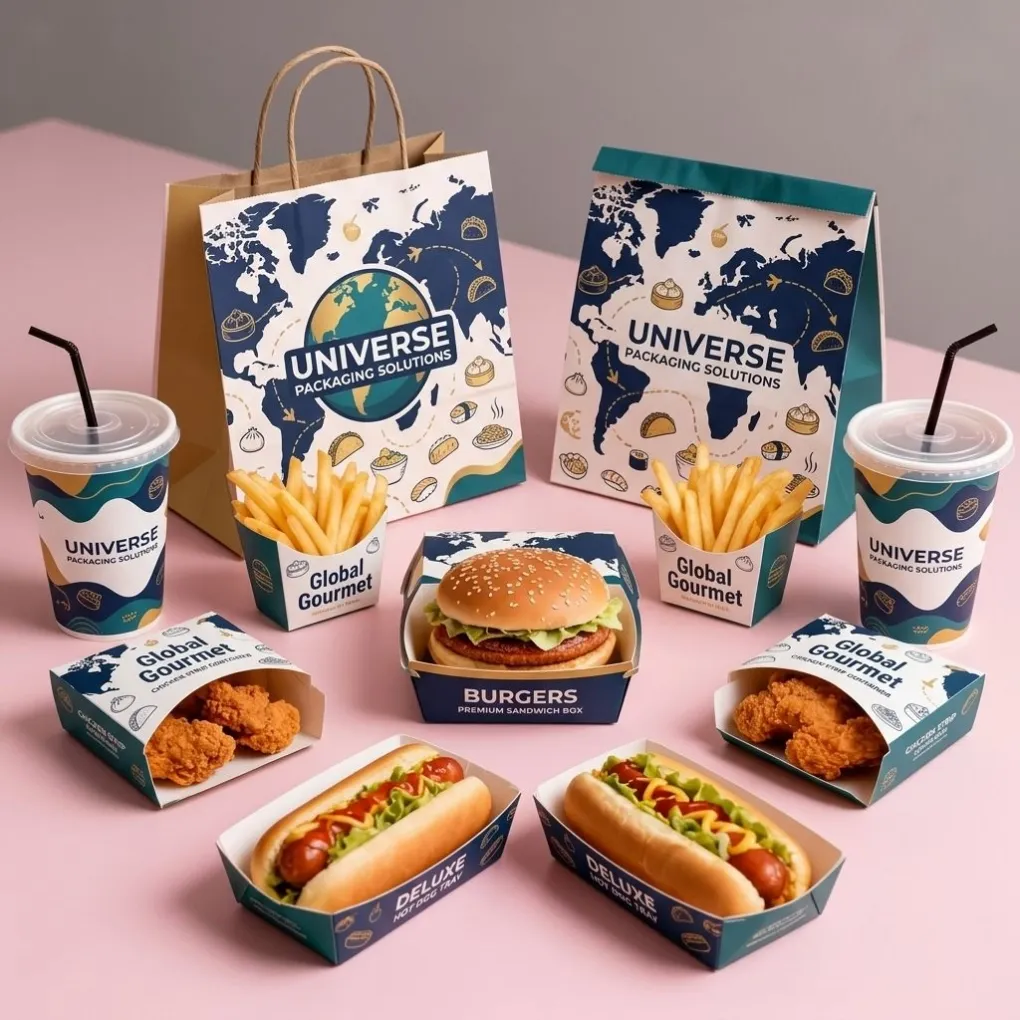
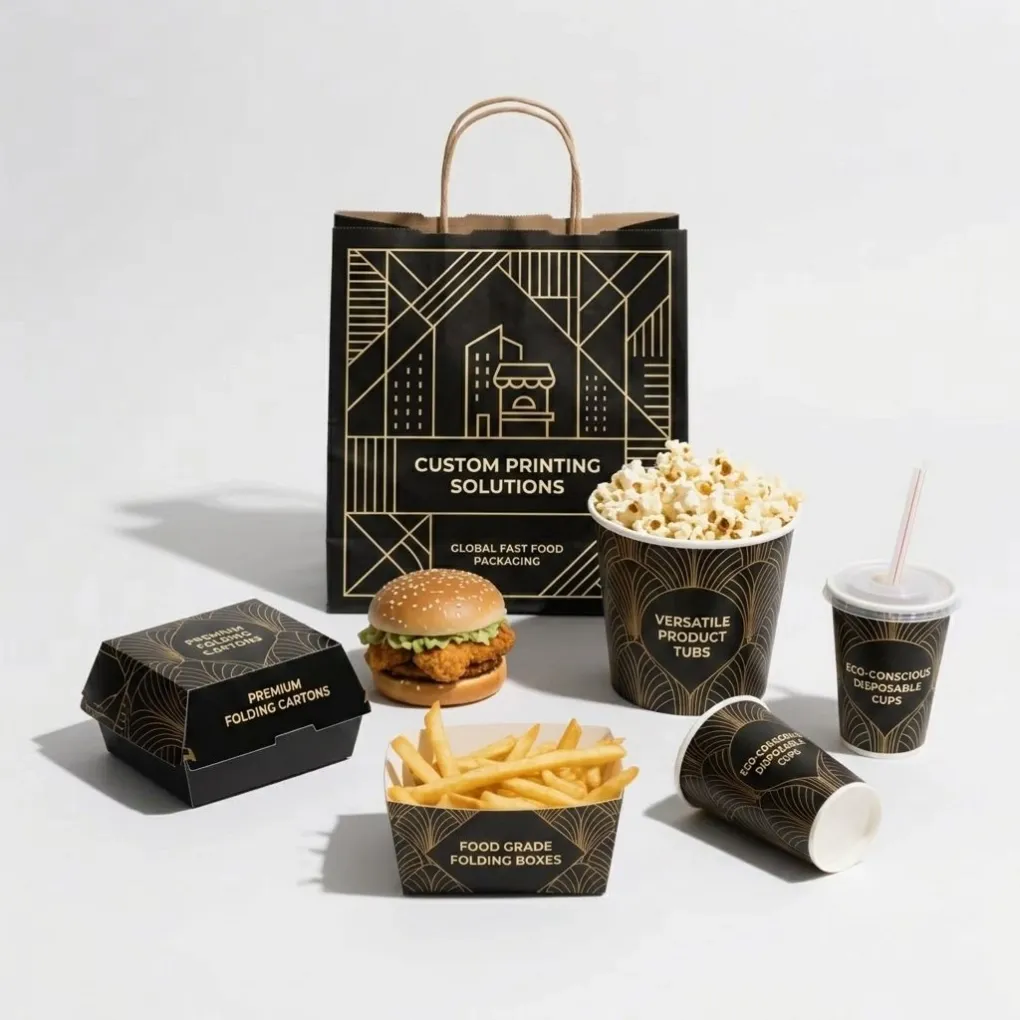
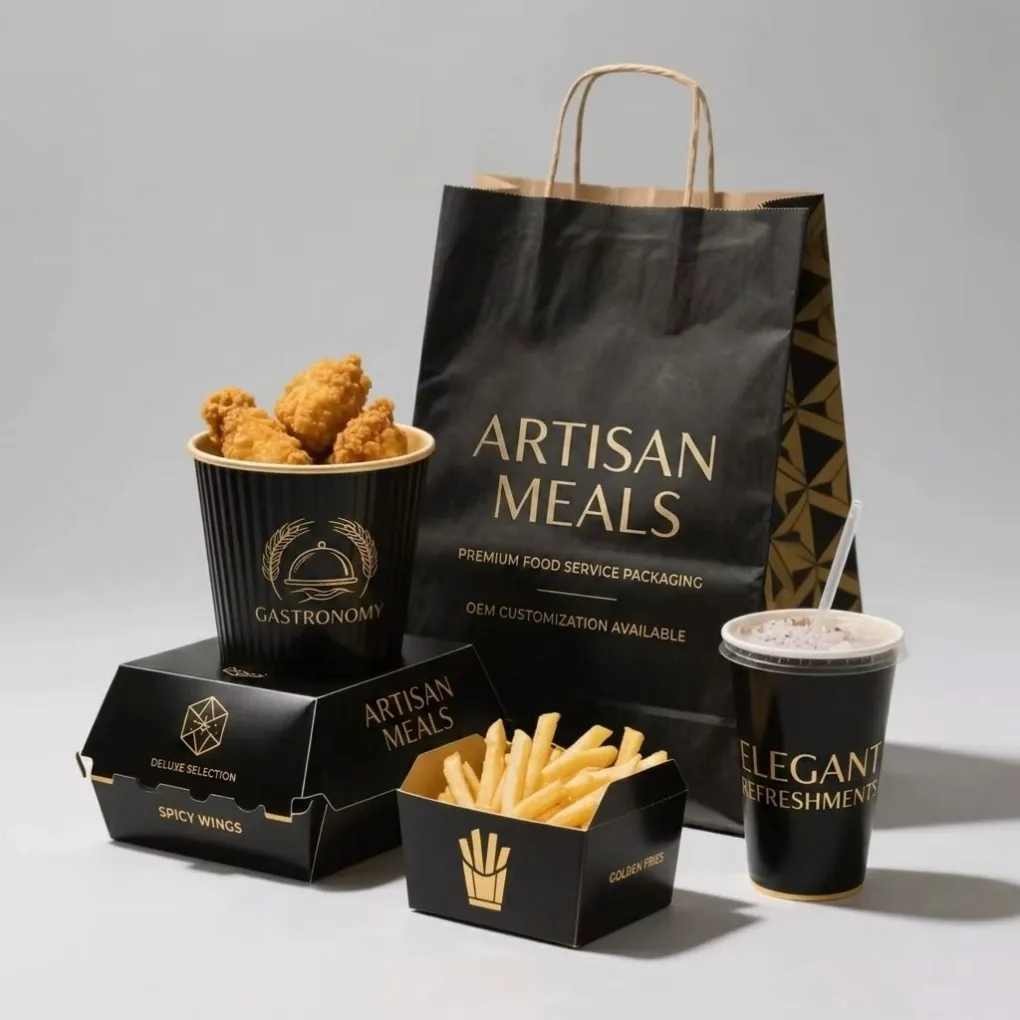
A Custom Fast Food Packaging Set creates a coordinated paper packaging system for burgers, fries, fried chicken, takeaway meals and other restaurant products. Instead of using unrelated boxes and bags, restaurants can develop multiple packaging formats with consistent colors, graphics and branding while adapting each structure to the food it carries.
A typical set may include burger boxes, fry sleeves, folding food cartons, chicken or meal boxes and takeaway paper bags. Each item can be customized in size, paper structure and printing according to the food, serving portion and distribution method. Because hot and greasy foods create different packaging demands, material and food-contact requirements should be confirmed for each component rather than applying one specification to the complete set.
Specifications & Customization
Item | Available Options |
|---|---|
Set Components | Burger boxes, fry sleeves, takeaway cartons, food buckets or boxes, paper carry bags and other paper-based formats where suitable |
Material | Food-contact-suitable paperboard, kraft paperboard or corrugated paper depending on application |
Structure | Folding carton, clamshell-style box, sleeve, takeaway box, die-cut food box or paper bag |
Size | Customized according to food dimensions, portions and serving requirements |
Printing | CMYK or Pantone printing |
Branding | Custom logo, colors, illustrations, QR codes and promotional graphics |
Surface | Natural kraft or printed paper surface depending on material |
Ventilation | Die-cut ventilation openings where required |
Barrier | Food-contact-suitable grease or moisture resistance where required and confirmed |
Delivery Form | Flat-packed where the selected structure allows |
Compliance | Materials, inks and coatings confirmed according to intended food contact and destination market |
Final materials and printing specifications should be confirmed according to the food type, temperature, grease exposure, holding time and applicable destination-market requirements.
One Brand System, Different Packaging Functions
A coordinated fast food packaging set should look consistent, but every package does not need to use the same board or structure.
A burger, fries and fried chicken create very different conditions inside their packaging.
Using one material specification across the entire set may simplify purchasing, but it can either underperform for demanding foods or unnecessarily increase material use for lighter products.
A better approach is to standardize the visual identity while engineering each package around its actual function.
Burger Packaging: Heat and Steam
Fresh burgers are often packed while warm.
When steam remains trapped inside a closed carton, moisture can condense and affect the texture of the bun and other ingredients. Where appropriate, small ventilation openings can be incorporated into the burger box structure to allow some moisture to escape.
However, more ventilation is not automatically better because excessive airflow may also allow heat to dissipate faster.
The correct structure should therefore consider serving temperature, delivery duration and how quickly the food is normally consumed.
For larger takeaway meals, board rigidity should also be considered so the base does not deform when the box is lifted.
Designing Packaging for Fries and Fried Foods
French fries and fried foods introduce a different challenge: localized oil and moisture.
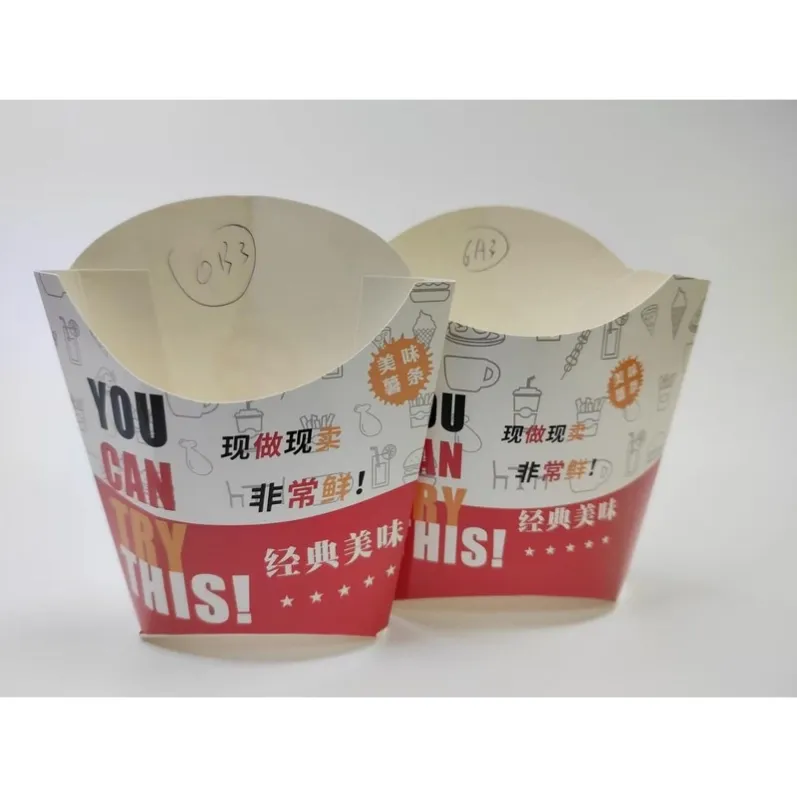
A fry sleeve should remain easy to hold while giving customers convenient access to the food. Its paper construction also needs to suit the expected grease exposure.
For takeaway delivery, the food may remain inside the packaging longer than it would for counter service. This can change the required barrier and ventilation strategy.
Grease resistance should therefore be selected according to the actual food and holding conditions rather than assuming that every fast food package needs the same coating.
The exact paper, coating or barrier solution should also be checked for food-contact suitability and applicable market requirements before production.
Structural Support for Chicken and Meal Boxes
Fried chicken, combo meals and larger takeaway portions generally create more concentrated weight than fries or small snacks.
For these products, bottom construction and sidewall rigidity become more important.
A carton that looks strong when empty may behave differently after being filled with hot food and carried by one side. The package should therefore be evaluated using representative product weight whenever possible.
Larger formats may benefit from stronger folding structures or corrugated paper depending on their dimensions and load requirements.
The aim is to provide sufficient support without automatically using unnecessarily heavy board, which can increase material usage and shipping volume.
Coordinating Takeaway Bags with the Food Boxes
The outer takeaway bag should be considered part of the packaging system rather than an unrelated accessory.
A restaurant order may contain several burger boxes, fries, sauces and other items. The paper bag therefore needs to accommodate the combined footprint and weight of the complete order.
Bag width and side gusset should allow boxes to sit relatively flat rather than being forced into a narrow base.
For suitable food and retail applications, Kraft Paper Shopping Bags can provide a useful starting point for developing a coordinated branded carry bag.
If the bag is expected to carry heavier meal combinations, top and bottom reinforcement may also need to be considered according to the final packed weight.
Consistent Printing Across Multiple Packaging Formats
One advantage of a custom restaurant packaging program is the ability to create a consistent visual identity across several products.
The burger carton, fry sleeve, food box and takeaway bag can share:
- Brand colors
- Logo position
- Typography
- Illustration style
- Promotional messages
- QR codes
- Social media information
- Seasonal campaign graphics
However, colors can appear differently on white coated board, natural kraft paper and corrugated surfaces.
For brands where color consistency is important, material selection and print proofs should therefore be evaluated before mass production.
A natural kraft bag, for example, will not reproduce light colors in exactly the same way as a white printed burger carton.
Food Contact Should Be Confirmed by Application
Food packaging requires more careful specification than general retail cartons.
Direct food contact, heat, oil, moisture and the destination market can influence which paper, inks, barriers or coatings are appropriate.
For this reason, claims such as “food grade” or “grease resistant” should not be treated as a universal specification.
When developing a custom fast food packaging set, buyers should provide:
- Type of food
- Whether food directly contacts the packaging
- Approximate serving temperature
- Grease and moisture exposure
- Expected holding or delivery conditions
- Destination market
Luxton can then review the packaging structure and suitable material direction, while the required food-contact documentation should be confirmed for the specific project and destination.
For pizza restaurants or food-service businesses requiring larger flat food cartons, Eco-Friendly Food Grade Pizza Packaging Boxes provide another relevant structure to consider.
Flat-Pack Design and Restaurant Storage
Many paper food boxes can be supplied flat before use.
Flat-packed packaging reduces storage volume in restaurants, warehouses and distribution centers compared with fully assembled cartons.
However, assembly speed also matters.
A complicated folding sequence may be acceptable for premium retail packaging but inconvenient during a busy lunch or dinner service.
For fast food applications, structural design should therefore balance:
- Assembly speed
- Closure security
- Structural strength
- Food access
- Storage efficiency
- Printing area
A simple, reliable structure can often provide more operational value than adding unnecessary locking features.
Ideal Applications
- Burger restaurants
- Fried chicken brands
- Fast food chains
- Takeaway restaurants
- QSR brands
- Cloud kitchens
- Food trucks
- Cafés
- Casual dining restaurants
- Delivery-focused food brands
- Catering businesses
- Stadium and event food service
- Pop-up food concepts
- New restaurant launches
Why Choose Luxton Package?
Packaging Development Around the Actual Food
Provide the food type, serving dimensions, approximate weight and takeaway or delivery requirements. Luxton can help evaluate appropriate box dimensions, structures and paper options for each item in the set.
Professional Structural Design Support
Different foods require different packaging structures. Our team can help develop burger cartons, sleeves, folding boxes and paper bags according to the product rather than simply resizing one standard template.
Packaging Engineers + Visual Designers
Luxton considers structural performance and brand consistency together, including box construction, artwork positioning, colors, printing and practical restaurant use.
Coordinated Multi-Item Packaging
Multiple packaging formats can share the same brand language while retaining structures appropriate for each food item.
Sample-to-Production Quality Control
Where appropriate, samples can be used to evaluate dimensions, folding, assembly and printing before bulk production.
Flexible Quantity for Selected Packaging Projects
Luxton supports low-MOQ packaging programs for selected projects. Because a fast food packaging set contains several different structures, the MOQ should be confirmed separately according to each item, material, printing method and production specification.
Frequently Asked Questions
Can you make a complete fast food packaging set with matching branding?
Yes. Burger boxes, fry sleeves, takeaway cartons and paper bags can be developed with coordinated colors, logos and graphics while using different structures according to the food.
Do all items in the set need the same material?
No. Different foods create different requirements for rigidity, heat, moisture and grease resistance. Each packaging component should be specified according to its actual application.
Can burger boxes include ventilation holes?
Yes, where appropriate. Die-cut ventilation openings can be added to help manage steam, but their use and position should depend on the food and delivery conditions.
Can the packaging be supplied flat?
Many folding paper boxes can be supplied flat to reduce storage and transportation volume. The final packing format depends on the selected box structure.
What is the MOQ for a custom fast food packaging set?
MOQ depends on each component, dimensions, material and printing method. Because one set may include several different packaging formats, quantities should be confirmed item by item before quotation.
How do we confirm food-contact suitability?
Please provide the food type, intended contact conditions and destination country. The appropriate paper, ink, barrier or coating and required documentation should then be confirmed according to the specific project.
Custom Packaging Made for Your Brand
To develop your custom fast food packaging set, please provide:
- Food products included in the set
- Required packaging types
- Food and box dimensions
- Approximate packed weight
- Quantity required for each item
- Logo or finished artwork
- Reference packaging
- Destination country
Luxton Package can recommend suitable paper structures, box formats, printing methods, ventilation details and food-contact material directions for each component while maintaining a consistent brand identity across the complete packaging set.